You had the tab open eleven minutes before the on-sale. You had the queue page, the second device, the credit card already typed into the browser. The announcement said tickets from $89. When the timer finally released you into the map, the cheapest thing left in your section was $164, and by the time you reached the payment screen the total said $214 for one seat in the upper bowl.
Nothing went wrong. That is the uncomfortable part. Every step of that sequence worked exactly as the people who built it intended. The $89 was real, the $164 was real, and the $214 was real, and they are three different numbers because live-event ticketing quietly stopped being a retail business and became something closer to an auction wearing a retail costume.
Understanding the machinery does not make the tickets cheaper. It does something more useful: it tells you which of your instincts are wasting your money, and which of the four or five decisions you make during an on-sale are the ones that actually matter.
The face value was never the price
The number in the announcement is what the industry calls face value, and it is best understood as a starting bid rather than a price tag. It is set months before the tour by the promoter and the artist's team, based on a guess about how a venue in a given city will sell, and it applies to a slice of the inventory — not all of it.
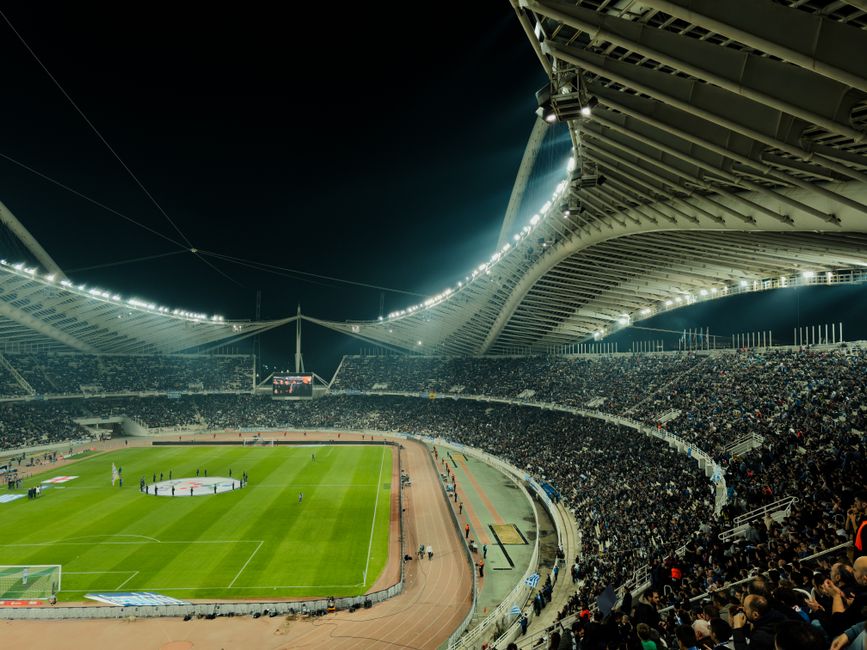
That slice can be surprisingly thin. A modern arena on-sale might hold back a large share of seats for presales, fan clubs, credit card partners, radio giveaways, the venue's own season-ticket holders, sponsors, and the artist's own guest list. What actually hits the general public at the announced starting price is whatever is left. If you have ever watched a stadium show appear to sell out in ninety seconds, a good part of what you were watching was not speed. It was arithmetic. Most of the building was already spoken for before the clock started.
The general on-sale is not the beginning of the sale. It is usually the end of it.
This is why the single most effective thing most fans can do costs nothing: find out which presales exist for a show and get into one. A card you already carry, a free artist mailing list, a venue newsletter you can sign up for in thirty seconds — these are not perks for insiders. They are the ordinary path, and the general on-sale is the leftovers.
Dynamic pricing: the algorithm sitting between you and the seat
The reason the price moved while you were in the queue is that a portion of the inventory is priced by software rather than by a person. Dynamic pricing means the system watches how fast tickets are moving, how much time is left, which sections are draining, and in some cases what the same seats are fetching on resale markets — and it reprices what remains, sometimes several times in an hour.
Ticketmaster's version of this is branded Official Platinum, and it is the source of most of the confusion. Platinum seats are not resale tickets and not VIP packages; there is no signed poster, no early entry, no laminate. They are regular seats that the platform has repriced upward toward what it believes the market will pay. The money goes to the artist and promoter rather than to a scalper, which is the argument in its favor: better the value goes to the people who made the show than to someone who bought it to flip it.
The argument against it is the one you experienced. A fan who is not paying close attention sees a price next to a seat, assumes that price reflects something about the seat, and pays hundreds more for a location that is objectively mediocre. Artists do control the switch — they choose whether to opt in, how much inventory to expose, and where the ceiling sits — but very little of that is disclosed to you on the seat map.
The practical consequence: during a hot on-sale, the price you see is a snapshot of demand at that second, not a valuation of that seat. Treat it accordingly. If a section is showing a number that feels absurd, that is information about the last four minutes of sales, and it can move.
Where the extra $50 came from
The gap between $164 and $214 is fees, and they are not one fee. A typical breakdown includes a service fee that the ticketing platform and the venue split, a facility charge that goes to the building, an order processing fee applied per transaction, and delivery — even when delivery means a barcode appearing in an app.
Two things follow from that structure. First, the order processing fee is per order, not per ticket, so splitting one group's purchase across three separate transactions genuinely does cost more. Buy together when you can. Second, the same artist on the same tour can carry meaningfully different fee loads at different venues, because facility charges are set by the buildings.
The visibility of all this changed in the United States on May 12, 2025, when the Federal Trade Commission's rule on unfair or deceptive fees took effect. It requires anyone selling live-event tickets to display the total price including mandatory charges, and to show that total more prominently than the pre-fee number. It does not cap fees or make them smaller. It moves the surprise from the checkout page to the search page, which is a real improvement — you can now compare two options honestly — but it is a disclosure rule, not a price control. Rules and enforcement evolve, so treat the specifics here as accurate as of writing.
| What you pay | Who generally receives it | Does it vary? |
|---|---|---|
| Face value | Artist and promoter | Set in advance, per section |
| Dynamic / Platinum uplift | Artist and promoter | Changes during the on-sale |
| Service fee | Ticketing platform and venue | Per ticket, varies by deal |
| Facility charge | The venue | Per ticket, set by the building |
| Order processing | Ticketing platform | Per order, not per ticket |
Resale is a market, and markets have a shape
The resale price of a ticket is not a fixed markup over face value. It is a curve, and it has a fairly reliable shape: a spike in the days right after the on-sale when scarcity feels total, a long soft middle, and then a sharp move in the final seventy-two hours as sellers face the deadline. Which direction that final move goes depends entirely on whether the show actually sold.
For a genuinely sold-out stadium night, late prices climb, because the seller knows you have no alternative. For the much larger category of shows that are merely popular — a mid-size arena on a Tuesday in a secondary market, the second night of a two-night run, an opening leg before the tour builds word of mouth — late prices fall, sometimes hard, because an unsold ticket at showtime is worth exactly zero and every seller knows it.
The worst moment to buy resale is the week of the announcement. The best is usually the week of the show — for everything except the shows that were always going to sell out.
Distinguishing between the two is less mysterious than it sounds. Check whether the primary seller still has inventory. If the official site is still listing seats a month out, the show is not sold out no matter how the resale listings are framed, and patience is likely to be rewarded. If the primary is genuinely empty and has been for months, patience will cost you.
What actually works
Strip away the folklore and a short list survives.
Get into a presale. This is the highest-leverage move available and it is free. Artist mailing lists, venue newsletters, and the card in your wallet cover most on-sales.
Decide your ceiling before the queue opens. Write down the number you will pay, all-in, including fees. The queue is engineered to produce urgency, and urgency is where budgets go to die. Under the current disclosure rules you can see the all-in figure early, so there is no excuse for the ceiling to be vague.
Buy the whole group in one transaction. Order fees are per order.
Do not confuse Platinum with premium. If a seat's price seems out of line with its location, it probably is. Check the map, not the badge.
Be honest about which show you are attending. A once-in-a-career farewell night is a different asset from a strong touring act playing your city for the fourth time in six years. Only one of those rewards buying early at any price.
Refresh in the last few days. Held inventory gets released, production holds get cleared once the stage plot is final, and plans fall through. Some of the best seats in the building appear in the final week, at face value, on the official site.
The part worth remembering
None of this is a conspiracy. It is a set of incentives that all point the same direction: artists want the value that scalpers were capturing, platforms want their cut of every transaction, venues want their facility charge, and every one of those parties is better off if the price you see early is smaller than the price you eventually pay. The 2025 disclosure rule pushed back on the last part. The rest is still the game.
So the ticket is going to cost what it costs. What you can control is whether you find that out at minute one or minute eleven, whether you buy in the panic window or the patience window, and whether you paid a premium for a badge or for a seat.
Go see the show. Just go in knowing which number you are actually looking at.