When the Bank of Korea (BOK) changes its policy rate, global headlines tend to treat it as a single number. Inside Korea, the same decision travels along several very different paths: into monthly mortgage bills, into the price of the won, into exporters' balance sheets, and into the property market. Understanding those paths explains why Korean central bankers often sound more cautious than their peers in Washington or Frankfurt.
The short version: The BOK sets one short-term rate, but Korea's heavy household debt, floating-rate loans and export-dependent economy mean that rate decisions reach households quickly and exporters through the exchange rate. That combination makes the BOK balance inflation, growth, housing and the won all at once.
What the BOK actually controls
The BOK's Monetary Policy Board sets a base rate, which anchors the overnight call rate that banks charge each other. It meets on a published schedule roughly eight times a year, and the base rate is the main tool for pursuing the bank's price-stability target, currently set at a 2 percent inflation goal. The bank also has a mandate to keep an eye on financial stability, which matters more in Korea than in many countries because of how much households borrow.
Changing the base rate does not directly change what you pay on a loan. It shifts the funding cost for banks, the yields on government and corporate bonds, and expectations about where rates are heading. Those then feed into deposit and loan pricing with different speeds and strengths depending on the product.
Why households feel it fast
Two features of the Korean housing and credit system shorten the distance between a policy decision and a family budget.
First, household debt is large relative to the size of the economy. Korea has consistently ranked among the most indebted advanced economies on this measure, which means a given change in rates affects a bigger share of income than it would elsewhere.
Second, a large portion of mortgages are floating-rate or reset periodically, typically linked to a benchmark such as the yield on bank funding bonds (the COFIX family of indices) or to short-term market rates. Unlike the long fixed-rate mortgages common in the United States, this means a rate change can show up in a monthly payment within months rather than years.
There is also the jeonse system, in which a tenant pays a very large refundable deposit instead of monthly rent. Jeonse deposits are frequently financed by loans, and landlords invest the deposit. When rates rise, the financing burden on tenants grows and the economics of jeonse for landlords shift, which can push the market toward monthly rent. When rates fall, the reverse tends to happen. This is one reason housing and rate policy are so intertwined in Korea.
The won channel: how rates reach exporters
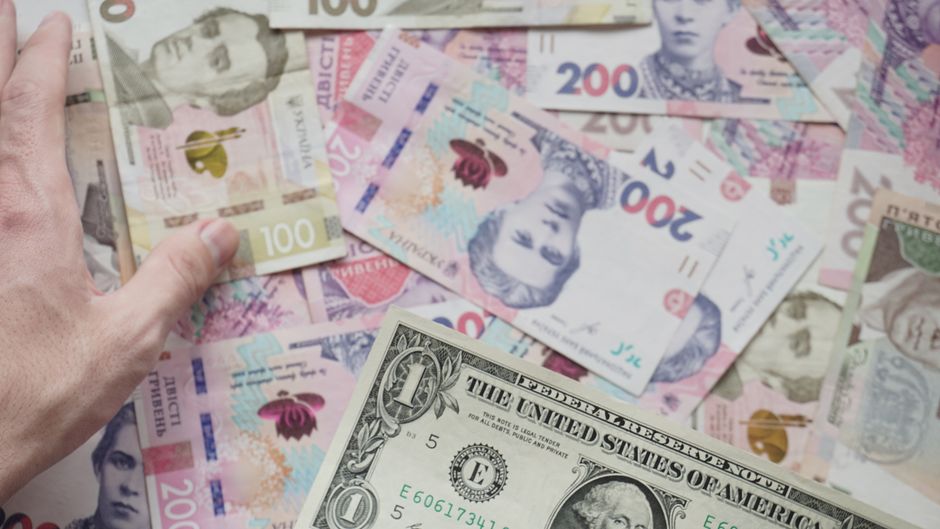
For an economy where exports are a large share of output, the exchange rate is a transmission channel as important as the loan rate. The link is the gap between Korean and US interest rates. If the Federal Reserve holds rates high while the BOK cuts or stays put, the interest-rate gap can make holding dollar assets more attractive relative to won assets, putting pressure on the won. If the gap narrows, that pressure eases.
A weaker won tends to help exporters by making their goods cheaper abroad and by increasing the won value of dollar earnings. It also raises the cost of imported energy and raw materials, which feeds into consumer prices. So a rate decision that pushes the won in one direction has mixed effects: it can support corporate earnings while adding to inflation pressure for households. The BOK does not target the exchange rate, but it watches it closely because of this feedback loop. (For the deeper mechanics, see our explainer on why the won moves and who wins when it falls.)
Why the BOK often moves cautiously
Put the pieces together and you can see the central bank's dilemma. Raising rates fights inflation and can support the won, but it squeezes indebted households and can cool a housing market that has its own momentum. Cutting rates relieves borrowers and supports growth, but it can re-inflate housing prices, add to household debt, and widen the gap with US rates, weakening the won.
Korean policymakers have therefore paid explicit attention to housing and household credit when setting rates, and regulators use separate tools, such as limits on loan size relative to income or property value, to cool lending without moving the base rate. Rate policy and these "macroprudential" rules work as a pair: the base rate is a blunt instrument, and the lending rules are a more targeted one.
What it means for you / what to watch
This is a framework, not a forecast. When you read about a BOK meeting, a few structural questions help you make sense of it:
- Direction relative to the Fed. The rate gap between Seoul and Washington shapes pressure on the won, which matters for Korean exporters and importers alike.
- The bank's stated priorities. BOK statements typically discuss inflation, growth, household debt and housing. Which of these gets the most emphasis is often the real signal about how the board is thinking.
- Household credit and housing conditions. If borrowing is accelerating, the board may hesitate to cut even when growth is soft.
- Exports and the trade balance. Because exports drive growth, the health of external demand, especially for semiconductors, affects how much room the bank has to stay tight or ease.
- Forward guidance. The board often signals its inclination for future meetings. Reading the wording changes over time tells you more than any single decision.
For a global reader, the takeaway is that Korea's policy rate is not a standalone dial. It sits at the junction of a debt-heavy household sector, a floating-rate loan market and an export machine that lives and dies by the exchange rate.
Closing thought
The next time you see a headline about the Bank of Korea holding, raising or cutting, ask where the effect will land first. For a mortgage holder, it may be next month's payment. For a chipmaker, it may be the won. For a policymaker, it is both, at once.
This is general information, not investment advice.