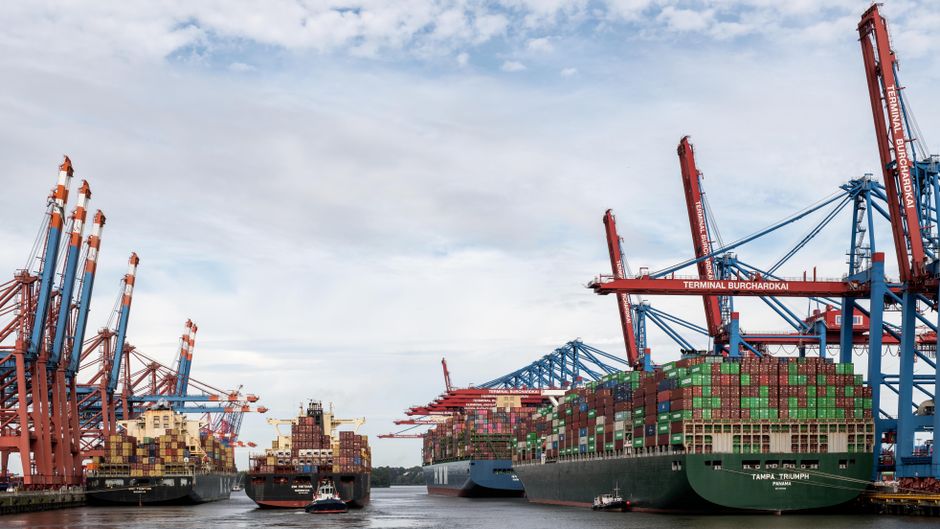
When a Korean shipbuilder announces a big order, the headline usually reads like a simple sale: a customer wants ships, a yard builds them, money changes hands. The reality is slower, lumpier and more interesting. Shipbuilding is one of the few industries where a company can be fully booked for years and still see its profits swing, because revenue, costs and cash arrive on very different clocks. Understanding that gap is the key to reading Korea's shipbuilders, a sector that sits near the center of the country's export economy.
The short version: Korean shipyards win orders years before they deliver ships, and they recognize revenue gradually as hulls are built. What drives profit is the gap between the price locked in at signing and the steel, labor and equipment costs paid over the build, which is why the order book matters but the order mix matters more.
How a shipbuilding order actually becomes revenue
A shipowner does not buy a ship off a shelf. It signs a contract for a vessel that does not yet exist, with a delivery date typically a couple of years away or more. The yard receives the price in installments tied to milestones, such as contract signing, steel cutting, keel laying, launch and delivery. Often the largest share arrives at delivery.
Accounting follows the work, not the cash. Most yards recognize revenue progressively, in proportion to the share of the project completed. So an order announced today barely touches reported revenue for months, then contributes steadily as construction advances. This is why analysts talk about the "order backlog": it is a pipeline of future revenue, not current earnings.
Why the price is fixed but the costs are not
The central tension in the business is that the selling price is set at signing, while the costs are incurred afterward. Steel plate is the biggest raw material input, and its price moves with the global steel market. Labor, subcontracting, engines and other equipment add further variable costs.
If steel and labor become more expensive after a contract is signed, the margin on that order shrinks. If prices fall, the margin widens. Yards manage this by negotiating "steel price escalation" terms in some contracts, by buying materials in advance, and by pricing new orders with a buffer. Still, the lag between signing and building means a yard's profit in any given year partly reflects decisions made two or three years earlier. A period of weak newbuild prices can therefore haunt earnings long after the market has recovered, and the reverse is also true.
Why Korea competes on complex ships, not just volume
Korea's yards are concentrated in a few coastal industrial clusters, and the major groups operate some of the largest docks in the world. Over time, they have leaned toward vessels that are harder to build and carry higher prices per ton of steel. Liquefied natural gas (LNG) carriers are the best-known example: they must keep gas at extremely low temperatures inside specialized containment systems, and few yards can build them reliably at scale.
Other categories follow the same logic: large container ships, ships designed for lower-emission fuels, and offshore production units. The strategic idea is simple. When a segment requires deep engineering skill, fewer competitors can bid, and the buyer pays for reliability and delivery certainty. Simple bulk carriers, by contrast, are more commoditized and more exposed to price competition.
| Segment type | Complexity | Typical competition | Margin tendency |
|---|---|---|---|
| Standard bulk carriers | Lower | Many yards | Thinner, more cyclical |
| Large container ships | Medium to high | Few large yards | Moderate |
| LNG carriers | High | A handful of yards | Higher, steadier |
| Offshore and specialty units | High | Very few | Higher, project-specific |
This table is conceptual. Actual margins depend on each contract and on prevailing market conditions.
What drives the orders themselves
Demand for new ships comes from several forces that do not always move together. Global trade volumes influence how much cargo needs carrying. Energy trade patterns shape demand for tankers and gas carriers. Environmental regulation pushes owners to replace older, less efficient vessels with ships that burn cleaner fuels or use less of it. Freight rates matter too: when shipping is profitable, owners order more ships, and when it is not, they hold back.
Because ships last decades, ordering is also cyclical in a self-defeating way. A boom encourages many orders at once, which later creates oversupply of vessels, which depresses freight rates, which then freezes new orders. Yards live through these waves, and the survivors are those that kept costs and balance sheets disciplined during the downturn.
Where shipbuilding fits in the wider Korean economy
Shipbuilding matters beyond the yards themselves. It supports a deep chain of suppliers: steel makers, engine makers, electrical and piping firms, and thousands of subcontractors, many of them regionally concentrated. It also contributes to exports, since newbuilds are sold abroad, and it connects to Korea's broader position in heavy industry alongside steel, petrochemicals and machinery.
Its link to the won is worth understanding. Many ship contracts are priced in US dollars while a large share of costs, such as wages and domestic suppliers, are paid in won. A weaker won therefore tends to help yard margins on contracts already signed, while a stronger won squeezes them, unless the yard has hedged the exposure with currency contracts. Hedging policy is one reason two yards can report different results from similar order books.
What it means for you and what to watch
If you follow Korean shipbuilders as a reader trying to understand the sector, a few structural questions are more useful than any single headline. First, what is the composition of the backlog: high-complexity vessels or commodity ones? Second, when were the large contracts signed, and under what steel and price conditions? Third, how much currency exposure is hedged? Fourth, how are the yards balancing capacity, since adding docks and workers too fast is how past downturns became painful?
Also notice the vocabulary in company disclosures. Phrases like "order intake," "backlog" and "delivery schedule" describe three different things. Order intake is new business signed in a period, backlog is the total unbuilt work, and deliveries are what actually converts into final cash. Mixing them up is the most common source of confusion for newcomers.
For households and businesses outside the sector, the practical takeaway is that shipbuilding is a slow-moving, long-cycle industry. Its health tends to show up in regional employment, supplier orders and export figures with a lag, rather than in sudden shifts.
The bottom line
Korean shipbuilding is best understood as a long-duration manufacturing business with a financial profile closer to project contracting than to consumer goods. Orders are the beginning of the story, not the end. Margins are set by the interplay of signing prices, input costs, currency and the complexity of the ships being built.
This is general information, not investment advice.