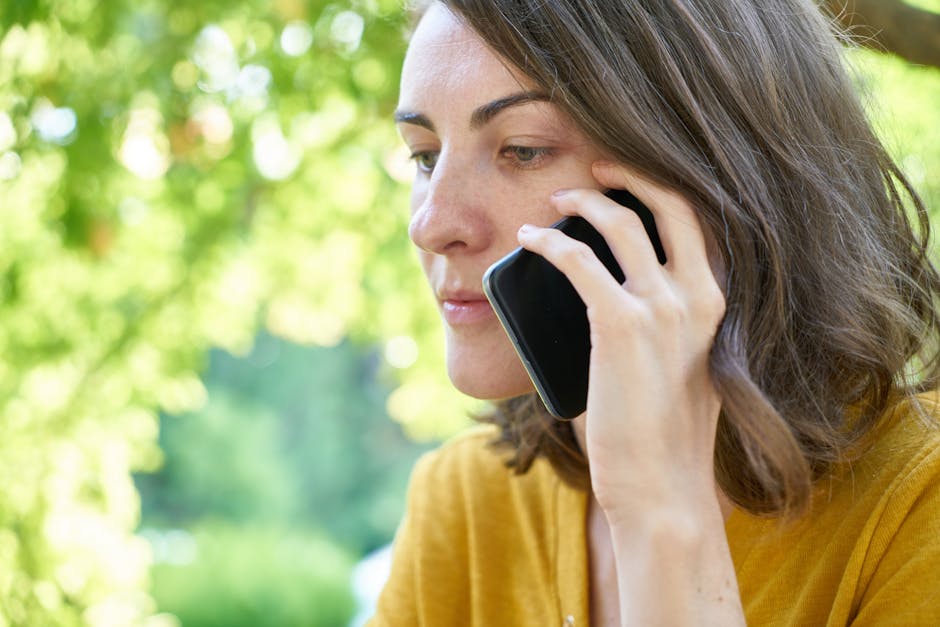
It is 11:40 p.m. Your phone buzzes with an unknown number. You answer, and a voice you know better than almost any other says, shaky and fast: "Mom, it's me. I'm in trouble. I can't talk long. I need you to send money right now."
Every instinct you have says to act. That is exactly what the person on the other end is counting on. Voice-cloning scams have moved from a curiosity to an everyday risk, and the good news is that a few cheap, low-tech habits defeat almost all of them.
How a cloned voice actually gets made
Modern voice-cloning tools need surprisingly little raw material. A short clip, sometimes only a few seconds, is often enough to produce a convincing imitation. Where do scammers find that clip? Usually in public places: a social media video, a podcast appearance, a voicemail greeting, a livestream.
The scammer doesn't need to hack anything. They only need you to have spoken in public once.
The software then turns typed text into speech in that voice. Some tools even work in near real time, so a caller can respond to what you say. That is why "but it sounded exactly like her" is no longer proof of anything. A familiar voice is now a weak form of identification, the same way a familiar handwriting style stopped being proof once printers got cheap.
The script never changes
The technology is new, but the con is old. Almost every voice-cloning call follows the same emotional script, and recognizing it matters more than detecting a "fake-sounding" voice.
- Urgency: something terrible is happening right now, and there is no time to think.
- Secrecy: "Don't tell Dad," "Don't call anyone else."
- Unusual payment: wire transfers, gift cards, cryptocurrency, or a courier who will pick up cash.
- A reason you can't verify: a bad phone connection, a lost phone, a police station, a hospital.
Consumer-protection agencies such as the US Federal Trade Commission have warned about this family-emergency pattern for years, and the cloned voice is simply a more persuasive costume on the same plot. If a call combines emotional panic with a demand for fast, hard-to-reverse payment, treat that combination itself as the red flag, whoever the voice seems to be.
Why smart people still fall for it
It is tempting to think only gullible people get caught. The opposite is closer to the truth. Scams like this are engineered to switch off the slow, analytical part of your brain by triggering fear for someone you love.
Consider a parent who is a careful, skeptical professional at work. At midnight, half asleep, hearing their child cry, they are not evaluating audio quality. They are thinking, "What do I need to do to help?" The scammer has hijacked a good instinct. Being fooled is a sign of caring, not of carelessness, which is also why shame keeps many victims from reporting what happened.
Defense one: a family safe word
The single most effective countermeasure costs nothing. Agree on a safe word or phrase with the people closest to you, something that is never posted online and not guessable from your social media.
Some practical rules make it work:
- Choose something memorable but random, such as "purple stapler" rather than a pet's name.
- Agree that anyone who calls with an emergency must say it, and that nobody will be offended when asked.
- Make sure older relatives know it too, since they are frequent targets.
- Never say it over text or email, and change it if you think it leaked.
If the caller cannot produce the word, you do not need to decide whether the voice is real. The conversation is over.
Defense two: hang up and call back
Even without a safe word, you have a powerful move: end the call and dial the person yourself using the number stored in your contacts. Not the number that called you, and not a number the caller gives you.
This works because the scammer controls only the incoming call. They do not control your real relative's phone. If the emergency is genuine, calling back costs you 30 seconds. If it is a scam, you will probably reach your relative at home, confused about why you are worried.
Some people add a second step: contact a different family member as well, or text the person and wait for an answer. Real emergencies survive a two-minute pause. Scams usually do not.
Defense three: shrink your public voice footprint
You cannot disappear from the internet, and you should not have to. But a few adjustments reduce the raw material available:
| Habit | Why it helps |
|---|---|
| Set social accounts to friends-only | Limits who can download your videos |
| Use a generic voicemail greeting | Avoids handing over a clean sample of your voice |
| Don't answer unknown numbers with a long "Hello, this is..." | Fewer words captured by robocalls |
| Be cautious with "voice verification" requests from unknown callers | Some calls exist only to record you saying words |
None of these is a perfect shield. Think of them as locking the car door: they will not stop a determined thief, but they make you a less convenient target.
What banks and workplaces are doing
The same technology is also being aimed at businesses. An employee might receive a call that sounds like their boss asking for an urgent payment. Many organizations now require a second channel of approval for any money movement: a call-back to a known number, a written sign-off, or a two-person rule.
You can borrow this idea at home. Treat voice as one signal rather than proof, and require a second, independent confirmation before money or sensitive information moves. Likewise, be cautious if a bank or service uses only your voice as a password; many experts now consider voice-only authentication a weaker choice than app-based or hardware-based methods. As of writing, check your own provider's options and ask whether you can switch to something stronger.
If you already sent money
First, do not panic or blame yourself. Move quickly: contact your bank or payment provider immediately and explain it was fraud, since fast reports sometimes allow transfers to be flagged or recalled. Then report the incident to your national fraud-reporting service (in the US, the FTC and the FBI's Internet Crime Complaint Center). Keep call logs, phone numbers, and payment details. Finally, warn family members, because the same scammer may try another relative.
The short version
Voice cloning means a familiar voice is no longer proof of identity. But you don't have to out-listen a machine. Pick a family safe word, hang up and call back on a number you already trust, slow down whenever urgency and money appear together, and keep your public audio footprint modest.
The next time a frightened voice calls at midnight, you will have something better than panic: a plan. And a plan, as it turns out, is the one thing a scammer can never clone.